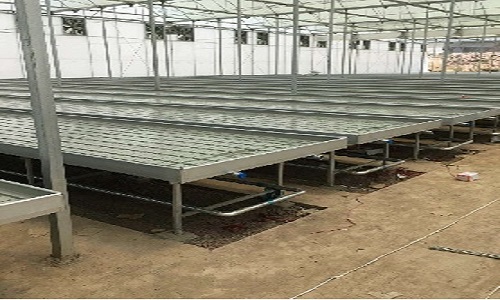
In the Middle East, hot and dry climate conditions, limited arable land, and water resources can make traditional fodder production challenging. At the same time, demand for fresh green fodder continues to create opportunities for livestock feed suppliers. For feed mills, adding fresh fodder to their existing product range can provide customers with more flexible feeding options while creating new business opportunities.
Recently, a feed mill in Oman contacted LYINE to learn more about hydroponic fodder machines. The customer wanted to produce fresh green fodder locally using hydroponic growing technology and offer it alongside their existing concentrated feed products. By combining fresh fodder with traditional feed, the customer aims to provide a more diverse range of feeding choices for livestock producers.
Based on the customer’s production requirements and business model, we introduced different hydroponic fodder machine capacities, configurations, optional features, and growing processes. After further discussion, the customer selected a hydroponic fodder machine with a production capacity of 250 kg per day. Instead of making a large initial investment, the customer decided to start with one machine for testing, allowing them to evaluate the actual production performance and market response before considering further expansion.
Compared with traditional fodder cultivation, a hydroponic fodder system can produce fresh green fodder in a controlled environment with relatively limited space and can support year-round production. This makes hydroponic fodder production a potential solution for regions where high temperatures, limited land, and water availability create challenges for conventional forage growing.
.jpg)
For feed mills and livestock feed suppliers, producing fresh hydroponic fodder locally can also complement existing concentrated feed products. The combination of fresh fodder and traditional feed can expand the product portfolio, offer customers more feeding options, and create additional opportunities for the feed business in the growing Middle Eastern market.



.jpg)
.jpg)