A customer from the United States contacted us through our website to inquire about the hydroponic Zip growing system, looking for an efficient and space-saving indoor hydroponic farming solution. The customer had previously learned about hydroponic cultivation through platforms such as YouTube and LinkedIn, gaining a solid understanding of soilless growing methods and basic hydroponic management, along with some practical growing experience.
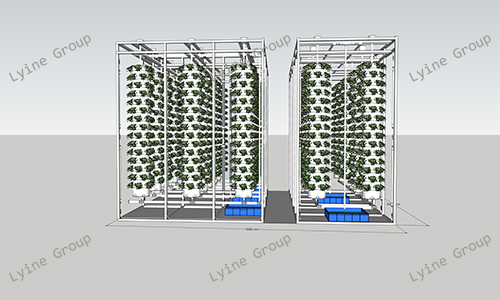
During the initial communication, the customer mainly focused on space utilization, total investment cost, and future crop yield performance. Since the project was still in the testing stage, the customer wanted to start with one sample system to evaluate the actual planting results before expanding to a larger commercial hydroponic project. Based on the indoor growing environment and crop requirements, we recommended one set of the 2.5-meter high Zip vertical hydroponic pipe growing system.
The Zip hydroponic system adopts a vertical farming structure, allowing growers to achieve high-density crop production in limited indoor spaces while significantly improving yield per square meter. Compared with traditional horizontal planting methods, this vertical hydroponic growing system saves valuable floor space and improves crop growth stability through an efficient nutrient recirculation system. It is especially suitable for high-value crops such as tomatoes, strawberries, lettuce, herbs, and leafy greens for continuous production.
.jpg)
One of the biggest advantages of hydroponic farming is water-saving efficiency. Through the recirculating nutrient solution system, water and nutrients are continuously absorbed and reused by plants, which can save a large amount of water compared with traditional soil cultivation. This makes the system particularly suitable for indoor farming environments and projects with strict resource management requirements.At the same time, soilless hydroponic growing eliminates common problems such as soil-borne diseases, weeds, and pest infestations. This reduces pesticide use and labor costs while making the growing process cleaner, safer, and easier to control. For indoor commercial growers, this means more stable production and better product consistency.
In terms of crop growth speed, the hydroponic system continuously provides roots with stable water, oxygen, and nutrients, allowing plants to absorb nutrients more efficiently. As a result, crops grow faster, yields become more predictable, and overall product quality improves. For economic crops such as tomatoes, this means more uniform fruit quality, easier harvest scheduling, and stronger suitability for continuous commercial hydroponic production.
For customers who are trying commercial hydroponic farming for the first time, the biggest advantage of this system is its relatively low initial investment and high return on investment. By starting with a single sample unit, growers can quickly complete practical testing, reduce business risks, and accumulate valuable growing experience before scaling up production.
This flexible approach provides reliable production data and a strong foundation for future expansion into larger indoor hydroponic farming projects.