This year, a client from Saudi Arabia initiated a systematic assessment of the feasibility of applying hydroponic farming to local environmental conditions. Following preliminary discussions and comparative evaluations of solutions, the client made an initial purchase of two hydroponic tower models—the 6P10 and 12P15—as samples for practical testing in a home garden setting.
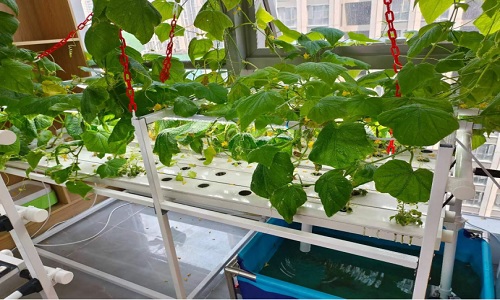
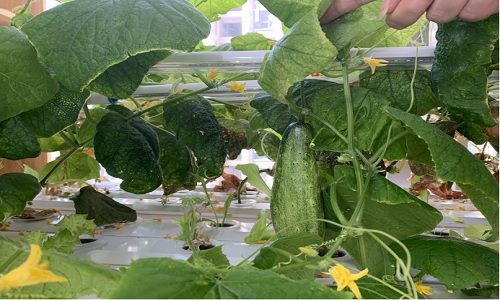
Following tower installation, the client successively cultivated strawberries, lettuce, and various leafy greens, while also experimenting with cherry tomatoes, cucumbers, and mint. Under high temperatures and intense sunlight, the hydroponic towers demonstrated stable performance. Crops grew uniformly with clear management protocols, requiring only routine water and nutrient solution replenishment. The overall user experience met the client's expectations.
Following the initial testing and verification of planting results, the customer promptly purchased additional 12P15 hydroponic towers to expand cultivation scale. Building on existing planting experience, they concurrently selected rockwool and related accessories to further optimize root environments, enhance planting consistency, and improve overall management efficiency.
.jpg)
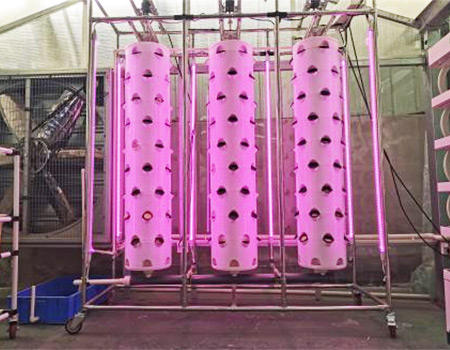
Saudi Arabia's climate features aridity, high temperatures, and significant evaporation, coupled with water scarcity. Traditional soil cultivation heavily relies on land and irrigation conditions. The hydroponic tower utilizes a vertical structure and recirculating nutrient solution system to enable concentrated cultivation of multiple vegetable varieties within limited courtyard space. It significantly reduces water consumption and exhibits minimal dependence on soil conditions. The customer implemented tiered configurations based on different crops' growth cycles and spatial requirements, enabling stable growth of diverse vegetables under local climatic conditions.
This case demonstrates the practical adaptability of hydroponic towers in the Middle East's hot, arid environment. It also validates their stability and replicability for household and small-scale applications, providing reliable reference for future large-scale cultivation planning.



.jpg)